Can AI’s Power Hunger End Up Accelerating the Shift to Clean Energy?
- 3 minute read•
- 1,005•
- Last Updated: 23 Jan 2026 at 11:21 AM IST
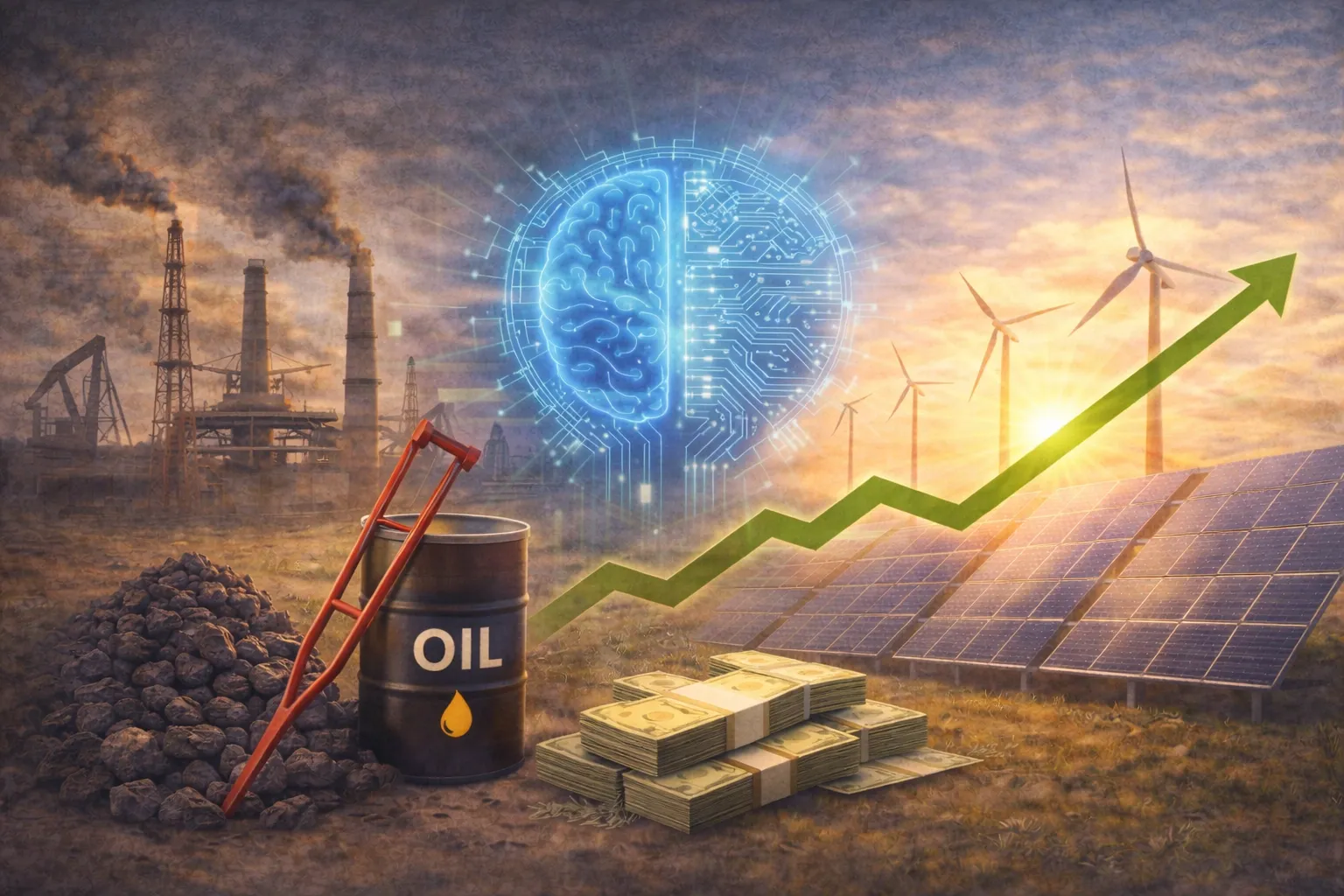
The rapid expansion of artificial intelligence is intensifying global electricity demand, pushing energy systems to their limits. Experts interviewed for a recent CNBC report say that fossil fuels now fulfil energy needs, but the dependency on these sources will end when better options become available, because they consider coal and gas to be a temporary solution that lacks sustainability for AI-driven growth.
The implementation of renewable energy solutions is the primary advantage of artificial intelligence technologies over the long term. The development of data processing systems and automated technologies has enabled more reliable electrical power sources to deliver power at constant rates while meeting increasing energy demand, matching the output of renewable energy sources. This raises a key question. Could AI end up accelerating the energy transition rather than slowing it down?
Why Are Fossil Fuels Being Called a “Crutch”?
The CNBC report shows that data centres, cloud computing services, and AI operations increasingly depend on fossil fuels as their temporary energy solution. Power plants that run on gas and coal are ramped up to increase their energy production capacity during times when renewable energy sources experience output variations.
The report warns that the approach will create permanent, high-emission infrastructure as climate demands increase. Fossil fuels may provide short-term reliability, but they do not solve the problems of long-term sustainability, fuel price and carbon regulation cost uncertainty.
The current debate has changed because of this framing. Instead of asking whether renewables can support AI growth, the focus is turning to whether fossil fuels can remain viable as energy systems modernise.
How Can AI Strengthen Renewable Energy Systems?
AI technology currently serves as a practical solution to the major obstacles renewable energy resources face. Artificial intelligence is improving the accuracy of wind and solar generation forecasts. This development enables operators to improve their supply predictions and reduce their reliance on fossil-fuel backup systems.
Electricity grid operators use machine-learning tools to optimise operations while balancing real-time electricity demand and controlling their energy storage systems. Renewable energy systems now operate more like traditional baseload power sources, eliminating the reliability gap that has made fossil fuels more dependable in the past.
AI technology also helps stabilise power generation, resulting in better financial performance for renewable energy systems competing with increasing electricity demand driven by AI systems.
The next question follows from this situation. If renewables become more predictable and efficient, do fossil fuels lose their strategic advantage?
What Does This Mean for the Energy Transition?
Experts believe that artificial intelligence has the potential to create a major change in how the world approaches its energy transition movement. AI can attract utility companies and government agencies to boost their expenditure on renewable energy sources and power grid updates instead of hindering progress toward decarbonisation.
The evolution of renewable energy systems toward advanced intelligence and flexible operation will eventually deliver an environmentally friendly solution that reduces costs and meets the power requirements of artificial intelligence systems. People now see fossil fuels as temporary solutions which will not serve as permanent energy sources.
The situation demonstrates important consequences. The ongoing development of artificial intelligence systems provides stronger support for renewable energy sources, as current energy systems require decarbonisation.
The Bigger Question for Policymakers and Investors
Policymakers face the task of creating energy systems that meet AI-driven demand while minimising their dependence on environmentally harmful fuels. The energy transition will change investment patterns, benefiting renewable energy developers, grid technology providers, and storage solution providers that use AI.
The energy discussion has reached a new stage because of the worldwide increase in AI usage. But one last question still exists. Will AI’s power appetite entrench fossil fuels, or will it ultimately accelerate the shift toward cleaner energy sources?
Sources: CNBC