Dow Tumbles More Than 700 Points and Fear Gauge Surges Over Greenland Tensions
- 4 min read
- 1,005
- Last Updated: 21 Jan 2026 at 5:26 PM IST
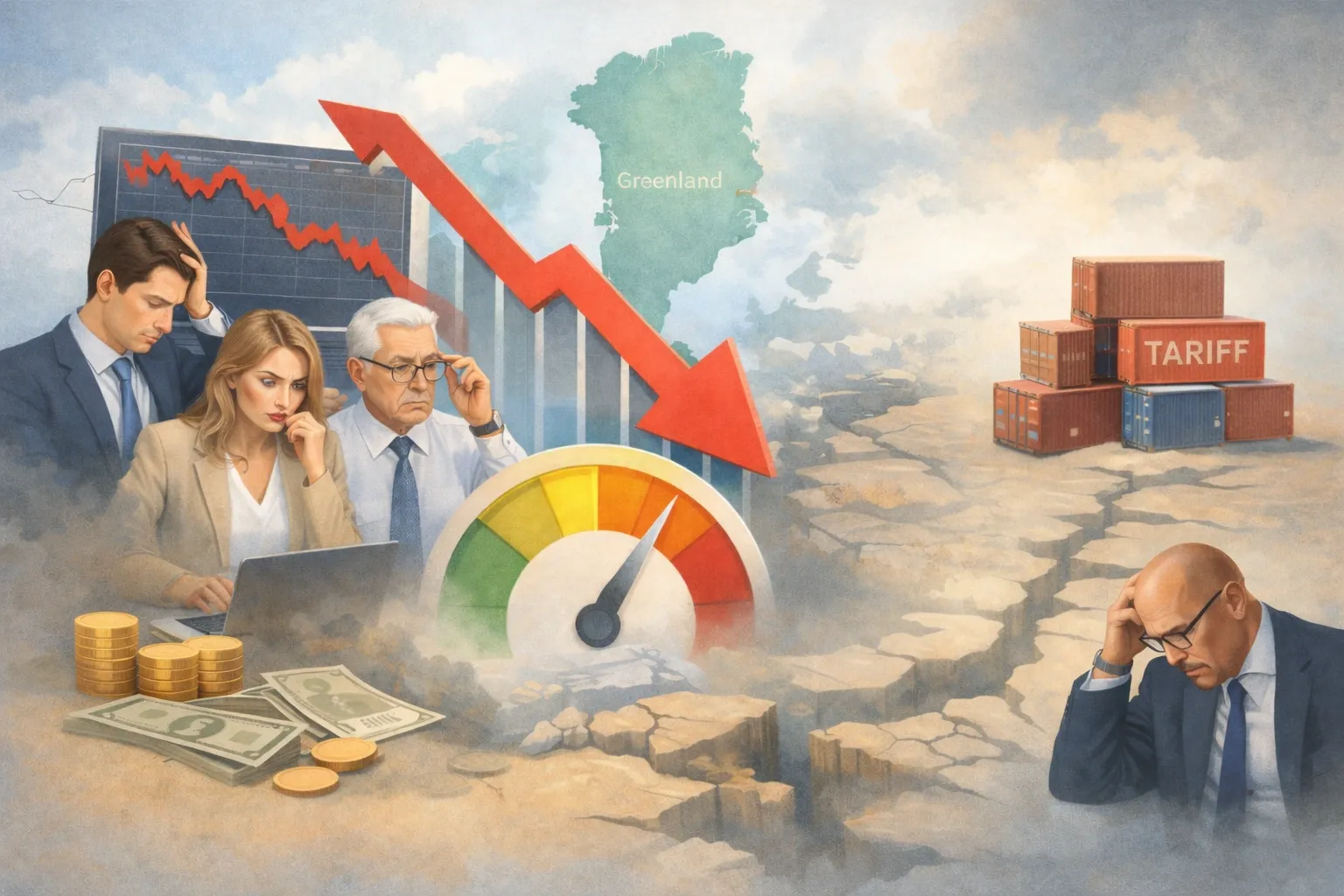
The U.S. stock market opened with a big loss on Tuesday, 20th January 2026, and the Dow Jones Industrial Average fell more than 700 points during early-morning trading, reversing recent gains amid a broad sell-off across sectors. The drop was generally caused by U.S. President Trump reiterating his threats of tariffs and indicating a more assertive stance toward Greenland, which in turn spooked markets about another trade war and geopolitical tensions.
Simultaneously, the VIX index, which is often called the "fear gauge" of Wall Street, skyrocketed, indicating that there was a sharp increase in investor anxiety about near-term market volatility. Technology stocks, banking and finance, and industrial companies were the main losers, while gold and other safe-haven assets attracted more investments.
The markets’ response to the policy and geopolitical situation was so pronounced that it raised a very important question: Is it just a short-lived shock caused by news coverage or a symptom of more severe investor sentiment fragility?
What Triggered the Dow’s 700-Point Slide?
According to analysts, a steep decline was caused by an interplay of political and economic factors. Among them, the president's new threat to impose tariffs on trading partners rekindled memories of past trade wars that negatively affected corporate profits and global supply chains.
Moreover, diplomatic tensions over Greenland’s strategic location intensified, with the U.S. taking a stance characterised by strong words. This raised concerns about potential frictions in the area and the likelihood of economic sanctions. The first reaction from investors was to reduce risk and move into safer assets.
Not only geopolitics, but also the markets were in a battle with the uncertainty regarding inflation, the Federal Reserve's policy, and the global growth downturn, which made the reaction to the political news even louder. This raises one more question. Would there have been such a sharp reaction in the market if the macroeconomic situation were more stable?
Why Did the Fear Gauge Spike So Sharply?
The VIX shot up to its highest level in weeks, indicating that traders were ready for more volatility. The increase in options trading suggested that investors were taking steps to mitigate potential losses.
In the past, significant VIX increases have generally occurred during periods of political uncertainty, trade shocks, or sudden changes in monetary policy. On 20th January, the VIX, Wall Street’s volatility index, jumped nearly 28 per cent to around 20.69, its highest level since November 2025, as geopolitical and tariff fears spiked. (GenAlpha) Such a pattern implies that the latest movement was as much about fear of the unknown as about hard economic data.
Simultaneously, volatility continued to come mostly from U.S. markets, while European and Asian stock indices experienced some pressure, indicating that the sell-off affected the global equity market. So, the question investors are raising now is this: has the new normal for Wall Street been defined by volatility?
What Does This Mean for Investors Going Forward?
Market strategists argue that the downturn highlights how equities react to shifts in geopolitics and trade. Emerging technology and manufacturing companies could be among the most affected if tariff disputes move from threats to actual policy actions.
Analysts note that U.S. corporate profits and consumer spending may remain strong despite the political situation. They also observe that markets tend to stabilise once there is clarity on political decisions.
To put it simply, the investors will probably be very observant of the White House announcements, tariff changes, and the Greenland issue in that order. The last question still exists. Is there going to be a quick market recovery once the hot air gets dissipated, or has a more extended correction already begun?
Sources:
0 people liked this article.